
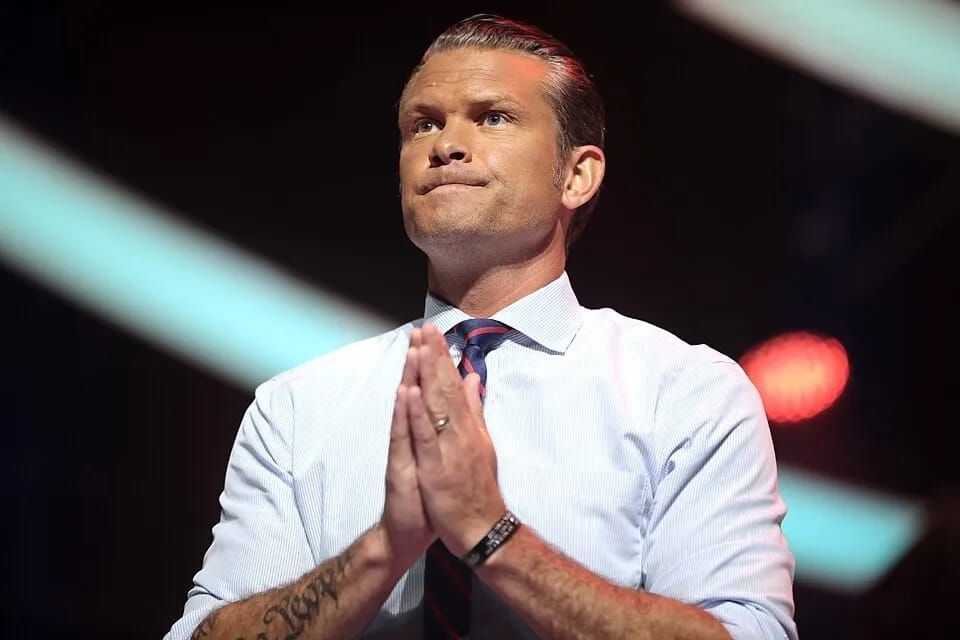
As early as today, November 9, 2026, Rep. Thomas Massie is expected to introduce eight Articles of Impeachment against Secretary of Defense Pete Hegseth:
- Violated the 1973 War Powers Resolution by conducting military operations against Iran without congressional authorization.
- Disregarded congressional authority over military action.
- Violated protections for civilians during military operations.
- Retaliated against Senator Mark Kelly for constitutionally protected speech.
- Abused his authority in military operations involving Venezuela.
- Violated legal restrictions involving military operations in Yemen.
- Conducted military operations in the Caribbean and eastern Pacific in violation of legal constraints.
- Abused the powers of his office in ways that undermine constitutional government.
Some of those things may be reasons Massie, a Republican, can’t stand Hegseth, but they can be explained away as not being “High Crimes or Misdemeanors.” I would limit the impeachment to three areas: his extrajudicial murders of brown people off the coast of Venezuela, his manipulation of promotions, and his arbitrarily removing Black people and women from promotion lists based on hidden “paper only” files.
Murders
The United States has killed an estimated 243 people in 71 attacks without due process and produced no evidence. The President has often repeated that each small boat destroyed would have led to 25,000 American fentanyl deaths. However, none of the boats were carrying fentanyl or headed to the United States. Many of the alleged drug smugglers Hegseth killed are alleged to have been fishermen, and America hasn’t proved otherwise. I’ll let others get to the bottom of that. I want to talk about the other thing: blocking Black people and women from promotions.
The American military has traditionally maintained a system in which a combination of professional experience, leadership, performance, and recommendations from senior officers determines promotions to its highest ranks. While technically true, the military has a long history of racial exclusion and discrimination they’ve been trying to get past, until Pete Hegseth and Donald Trump came along.
The process is designed to identify the people best qualified to command troops, oversee military operations, and eventually become generals and admirals. But that system has gained another layer of scrutiny, one with little apparent connection to battlefield performance or the ability to lead troops.
Secret Files
Behind closed doors, Pentagon officials have been compiling files on senior military officers whose names military promotion boards have already approved. The files include photographs, videos, speeches, news articles, and other publicly available information that might offend Hegseth or suggest an officer supported policies associated with diversity, equity, and inclusion. Participation in Black History Month events, efforts to recruit women and minorities, appearances celebrating LGBTQ service members, and even support for COVID vaccination programs have reportedly become potential liabilities.
The Pentagon has referred to the process as “D-ROG,” short for derogatory material. What makes the practice particularly troubling is that it reportedly has been used to remove officers from promotion lists after military selection boards had already determined they deserved advancement.
A June 19, 2026, investigation by The New York Times, written by Greg Jaffe and Kate Kelly, revealed the operation's scope. Based on interviews with 15 current and former military and administration officials, the investigation described a system that has quietly interfered with the careers of highly qualified women and minority officers. By that point, Hegseth had blocked the promotions of at least 40 senior officers to general and admiral ranks. Approximately half were women or members of racial minority groups.
The investigation raised a fundamental question: Is the secretary of defense building a military leadership team based on professional merit, as he claims, or is he using political and ideological screening to determine who is permitted to advance?
A secretary with a different vision of the military
Hegseth’s hostility toward diversity initiatives was not something he developed after becoming secretary of defense. It was a central theme of his public commentary before entering the Trump administration.
In his 2024 book, The War on Warriors, Hegseth argued that diversity programs had undermined military effectiveness by elevating people because of their race or gender rather than their qualifications. He suggested that some of the worst military leaders he had encountered had been promoted because they were perceived as diversity selections.
He described what he considered an inversion of traditional standards, writing, “It’s Black over white. Female over male. Gay over straight.”
He argued that the military had become preoccupied with representation and had consequently weakened its standards. He promised that, under his leadership, promotions would be “ruthlessly meritocratic” and focused on warfighting ability.
There is nothing inherently objectionable about demanding that military promotions be based on qualifications and demonstrated performance. The difficulty arises when the secretary’s definition of merit appears to exclude officers because they participated in activities that were officially encouraged by the very institution they served.
The military had previously instructed officers to help recruit women and minorities, address barriers to advancement, and encourage a force that better reflected the American population. Officers who followed those instructions could now find themselves under scrutiny for doing so.
The contradiction is difficult to overlook. An officer could spend decades performing successfully, receive excellent evaluations, command major military operations, and be selected for promotion by a board of experienced military leaders, only to have a photograph or speech from an officially sanctioned event become a reason for exclusion.
How the secret files were assembled
According to the New York Times investigation, Hegseth and his senior aides ordered the Army, Navy, Air Force, and Marine Corps to conduct internet searches of officers selected for promotion.
The objective was to find photographs, videos, news reports, or other public records that might attract the secretary’s disapproval. The services conducted their reviews, after which Hegseth’s own staff conducted additional searches to ensure that nothing had been overlooked. The material was collected under the D-ROG designation.
These were not necessarily conventional classified intelligence files. Much of the information reportedly came from publicly available material, including military websites, official speeches, recruiting advertisements, and photographs of officers participating in events.
The secrecy involved the screening process, the criteria being applied, and the decisions made from the information collected. Officers were not necessarily told that their public appearances or statements were being examined. In some cases, they reportedly did not even know that their names had been removed from promotion lists.
The government was not simply investigating allegations of misconduct or reviewing an officer’s professional record. It was reportedly searching for evidence that an officer had supported policies the secretary opposed, even when previous administrations and the Department of Defense itself had authorized them.
The practice also created an unusual incentive for military personnel. An officer who had followed instructions to participate in a recruiting campaign, mentor young women, or speak about racial barriers could later be penalized for having done precisely what the military had asked.
Four officers caught in the Army confrontation
One of the earliest major confrontations involved the Army.
According to the investigation, Hegseth ordered Army Secretary Daniel Driscoll to remove two Black officers and two female officers from a 29-person promotion list for one-star generals.
Driscoll reportedly resisted. He and other Army leaders believed the officers had distinguished records and deserved promotion. Their careers included decades of military service, and their selection had followed the established process.
The disagreement lasted for months. Driscoll repeatedly refused to remove the names, citing the officers’ exemplary records.
Eventually, in March 2026, Hegseth removed the four officers from the list and forwarded the revised slate to the White House.
The episode mattered because it showed the controversy was not simply about changing military policy or eliminating diversity programs. The secretary was intervening in individual promotion decisions after military professionals had already completed the selection process.
It also raised questions about the Secretary of Defense's authority to make such changes. Congress has established procedures governing military promotion boards, and the services have traditionally played the central role in selecting officers for advancement. Hegseth’s intervention challenged those longstanding arrangements.
The Navy: Nine officers removed
The Navy experienced a similar confrontation.
In May 2026, the Navy had prepared a list of 31 officers selected for promotion to one-star admiral. Senior Navy leadership supported the selections, but Hegseth’s office objected to several names. The secretary ultimately removed nine officers from the original list.
The resulting list contained 22 nominees, all men and overwhelmingly white. The original list included three women and two Black officers, in addition to the officers who remained.
The Pentagon disputed allegations that race and gender determined the removals. Its spokesperson, Sean Parnell, said that promotions were awarded to those who had earned them and that the department would not consider an officer’s skin color or gender.
But the reported pattern prompted concern among senior military officials, particularly because the Navy had already conducted its own competitive selection process.
The controversy also demonstrated that the screening system was not limited to the Army. Hegseth’s office intervened across military branches, and Navy officers discovered that participation in diversity-related activities could become a career liability.
Rear Admiral Stephen Barnett: A career that did not fit the political screening
Perhaps the most revealing example involved Rear Admiral Stephen D. Barnett. Barnett had served in the Navy for decades. He was an experienced naval aviator who had flown more than 250 missions in Iraq and held increasingly important command positions.
He had not graduated from the Naval Academy. He entered the Navy in 1991 after attending Tennessee State University, a historically Black college. He joined because of the opportunity for a stable career, health care, and the chance to serve his country. He eventually became a senior officer trusted with major responsibilities.
One of his most significant assignments came after the 2021 fuel contamination disaster at the Navy’s Red Hill facility in Hawaii. Petroleum from the facility contaminated an aquifer that supplied drinking water to thousands of people.
Barnett was assigned to lead the response. What was initially expected to be a 12-month assignment lasted more than three years. He worked on the cleanup and the difficult task of restoring public confidence.
Senior Navy officials regarded his performance as exceptional. They considered him the strongest candidate to lead Navy Installations Command, which oversees Navy bases in the United States and overseas. But Barnett had a problem unrelated to his operational performance.
He had participated in Black History Month events and spoken about the history of Black Americans in the Navy. At a 2021 event, he discussed the progress made since earlier generations when it had been nearly unthinkable for a Black person to become a naval aviator.
He also spoke about the importance of a military that reflected the diversity of the country it served. At an earlier LGBTQ Pride event in 2018, he had spoken about making the world safer, freer, and more equal for everyone.
These appearances were part of his official public service. They were not evidence of professional misconduct. Nevertheless, they became part of the material reviewed in the screening process.
The Navy conducted an internal examination of Barnett’s public record and concluded that his appearances demonstrated empathy and inclusiveness. Its review described his public record as remarkably disciplined and focused on professional issues.
Navy leadership supported his promotion. Adm. Daryl Caudle, the Navy’s highest-ranking officer, and then-Navy Secretary John Phelan were among those who supported his advancement. Gen. Dan Caine, chairman of the Joint Chiefs of Staff, also supported him.
Hegseth rejected the recommendation. Instead of selecting Barnett, he chose a white officer who had been the Navy leadership’s third choice. Barnett, who was expected to retire, declined a request for comment.
His experience illustrates the controversy's central issue. The question was not whether he had served successfully. The Navy’s leadership believed he had. The question was whether his participation in officially sanctioned activities had made him politically unacceptable to the Secretary of Defense.
Vice Admiral Sara Joyner: When mentoring women becomes a liability
Another revealing example involved Vice Admiral Sara Joyner, an experienced Navy fighter pilot. Joyner had spent years in aviation leadership and had been considered for a high-profile position at the Pentagon. Chairman of the Joint Chiefs, Dan Caine, supported her advancement and attempted to persuade Hegseth to reconsider.
Joyner had participated in events intended to encourage and mentor female aviators and submariners. She also appeared in a Navy recruiting advertisement describing her career as a trailblazing woman in naval aviation.
In the advertisement, she delivered a message about the importance of women pursuing their ambitions in the military. To Navy officials, her appearances represented recruitment, mentorship, and the story of an accomplished officer. But the public appearances reportedly became part of the material that worked against her. Hegseth did not approve her advancement. Joyner subsequently retired.
Her experience raises an especially troubling question for women in uniform. If a female officer’s participation in recruiting and mentoring activities can become grounds for blocking advancement, what message does that send to younger women considering military careers?
The Navy needs qualified pilots, commanders, engineers, intelligence officers, and other professionals. It also needs experienced leaders who can encourage the next generation to pursue those careers. Joyner had been doing both.
Forty careers and a larger institutional problem
By June 2026, the reported number of officers whose promotions Hegseth had blocked had reached at least 40.
The affected officers were not all Black or women. Some were white men, and some were reportedly targeted because they supported COVID vaccination programs or other policies associated with the previous administration.
That distinction matters because the controversy is broader than a simple racial or gender-based count. It concerns the use of political and ideological screening in a system intended to evaluate military leadership. Still, the disproportionate impact on women and minorities was difficult to ignore.
The military’s senior officer corps remains substantially less diverse than the overall population of active-duty personnel. Women and minority officers have spent decades working to overcome barriers to advancement.
The Defense Department’s own research has documented racial discrimination and harassment within the armed services. Nearly one-third of Black military personnel reported experiencing racial discrimination, harassment, or both during 12 months in a survey conducted during Trump’s first administration.
Hegseth has questioned the emphasis placed on such findings. Instead, his approach focuses on eliminating what he considers preferential treatment. But eliminating discrimination and eliminating efforts to recruit and retain underrepresented personnel are not necessarily the same thing.
The military can insist on high standards while recognizing that qualified people may encounter barriers unrelated to their ability to perform. The question is whether the secretary’s approach is improving the quality of military leadership or narrowing the pool of people allowed to reach its highest ranks.
Congress demands answers
The controversy has attracted congressional attention. In July 2026, Democratic senators Cory Booker of New Jersey and Brian Schatz of Hawaii requested an independent investigation by the Defense Department inspector general.
They questioned whether Hegseth had used personal political views and perceptions about race and gender to interfere with promotion decisions. Their request called for investigators to examine the authority under which the secretary removed officers from approved lists, the criteria used to evaluate candidates, and the communications between Hegseth’s office and the individual military services.
They also wanted to know whether officers had been informed of their removal and whether they had any opportunity to challenge the decisions.
The senators raised an especially important concern: whether officers were being punished for public statements and appearances that the Department of Defense had officially approved.
The Senate’s version of the 2027 defense authorization legislation also included a provision requiring written justification and notification when the secretary removes officers from promotion lists.
These developments demonstrate that the controversy has become a question of institutional accountability, not simply an internal personnel disagreement.
The Pentagon maintains that its promotion decisions are based on merit. Hegseth’s supporters argue that a Secretary of Defense must have the authority to ensure that the military’s leadership reflects the administration’s priorities.
Critics counter that political alignment is not a substitute for professional qualifications and that the military’s promotion system cannot function properly if officers fear that their careers will be determined by ideological screening.
The danger of turning military service into a political loyalty test
There is a fundamental difference between eliminating racial preferences and eliminating people who have spent their careers serving the country. The former is a policy debate. The latter, if the reported facts are accurate, represents a potentially serious departure from the principles governing military promotions.
An officer should not receive a promotion simply because she is a woman or because he is Black. But neither should an officer lose an opportunity for advancement because of race, gender, or participation in an activity that the military itself once encouraged.
The military’s effectiveness depends on trust. Officers must believe that their evaluations, assignments, and promotions reflect their professional accomplishments. If they begin to believe that attending a Black History Month event, mentoring female recruits, or expressing support for equal opportunity can jeopardize their careers, the consequences will extend beyond the individuals whose names have been removed from promotion lists.
It could discourage officers from participating in legitimate recruiting and leadership programs. It could make senior officers reluctant to speak about discrimination or barriers to advancement. And it could send a message to younger service members that their professional futures depend as much on political acceptability as on their performance.
Pete Hegseth has repeatedly promised a merit-based military. That is a reasonable objective. But meritocracy requires transparent standards, consistent evaluations, and decisions that can withstand scrutiny.
A secret screening operation that searches officers’ public histories for politically objectionable photographs, speeches, and appearances raises serious questions about whether those standards are being applied consistently.
The country deserves to know who ordered the files assembled, what criteria were used, who reviewed the information, and why officers selected by their own military promotion boards were subsequently rejected.
Most importantly, Congress and the inspector general should determine whether race, gender, or political considerations improperly influenced those decisions.
America’s military should promote the people best qualified to lead it. It should not become an institution in which a secretary’s personal political preferences determine whose decades of service count and whose do not.
Conclusion: Two Reasons Congress Must Consider Impeachment
Pete Hegseth’s handling of military promotions raises two issues that Congress cannot afford to dismiss as ordinary disagreements over personnel policy. The first is his reported use of secret D-ROG files to override the decisions of military promotion boards. Officers who had been evaluated, recommended, and selected by experienced military leaders were subjected to an additional political screening process. Their careers could be derailed by photographs, speeches, public appearances, or participation in activities that had previously been encouraged or authorized by the Department of Defense. The second issue is the disproportionate targeting of women and minority officers, many of whom appear to have been penalized for participating in diversity, recruiting, mentoring, and inclusion activities. If the evidence establishes that qualified officers were denied advancement because of their race, gender, or association with policies Hegseth personally opposed, this is not simply a disagreement about military philosophy. It raises serious questions about discriminatory treatment and the abuse of governmental authority.
Either issue deserves congressional scrutiny. Together, they raise a much larger question about whether the secretary of defense has used his office to impose personal political preferences on an institution that is supposed to operate according to professional standards and established law. A defense secretary certainly has authority to demand excellence, question promotion recommendations, and insist on military readiness. He does not have an unlimited license to substitute political loyalty for professional qualifications or to punish officers for activities that were part of their official responsibilities.
Congress should not allow the Pentagon to investigate itself quietly and then declare the matter resolved. It should obtain the D-ROG files, examine the communications directing their creation, identify who ordered the removal of individual officers, and determine whether race and gender played a role in those decisions. It should also establish whether Hegseth exceeded his statutory authority or violated protections governing military personnel decisions.
Impeachment is a constitutional remedy intended for serious abuses of public office, not merely for policy disagreements or unpopular decisions. Whether Hegseth’s conduct meets that standard is a determination Congress must make after examining the evidence. But the allegations are serious enough that impeachment must be considered as a matter of congressional oversight and constitutional accountability.
The men and women serving in America’s armed forces deserve to know that their careers will be judged by their service, leadership, and accomplishments — not by whether their secretary of defense approves of their race, gender, photographs, or public statements. If the Pentagon has become a place where political acceptability matters more than professional merit, Congress has an obligation to find out who made that possible and whether the secretary should remain in office.
Conclusion
The case for impeaching Pete Hegseth should rest on more than one controversy. It should begin with his reported use of secret vetting files to interfere with military promotion decisions, potentially excluding women and minorities who had earned advancement through the established review process. It should also examine whether he used the authority of his office to undermine the independence of military promotion boards and replace professional standards with political or ideological judgments. A defense secretary has enormous influence over the armed forces, but that authority does not give him permission to turn military careers into instruments of personal or political preferences.
A third and particularly grave issue is the military campaign against suspected drug-smuggling boats in the Caribbean and eastern Pacific. Since September 2025, hundreds of people have been killed in these strikes. Human Rights Watch has characterized the campaign as unlawful extrajudicial killings, arguing that the administration has not demonstrated that the people aboard the vessels posed an imminent threat to anyone’s life. The September 2, 2025, attack is especially troubling: after the initial strike destroyed a boat, a second strike reportedly killed two survivors clinging to the wreckage. In another incident cited in the impeachment allegations, eight shipwrecked survivors reportedly died before rescue assets arrived. These are not simply questions about the effectiveness of an anti-drug campaign. They raise fundamental questions about whether the United States can kill people suspected of criminal activity without arrest, trial, or a demonstrated legal justification.
Hegseth’s responsibility deserves particular scrutiny because the Defense Department operated the campaign, established targeting procedures, and defended the legal basis for the strikes. The administration maintains that the operations were lawful military actions against designated terrorist organizations. But that assertion does not settle the matter. Congress must determine whether the military had lawful authority to conduct these attacks, whether the targets could legally be treated as combatants, whether survivors were deliberately denied protection, and who authorized the decisions that resulted in these deaths. If the evidence establishes that Hegseth authorized or knowingly oversaw unlawful killings, that conduct would represent an extraordinary abuse of the powers entrusted to him.
These three matters — the reported manipulation of military promotions, the use of secret files to target women and minorities, and the killing of suspected criminals without judicial process — raise a common question: Does Hegseth understand that his office carries obligations to the Constitution, the law, and the American people, rather than simply to the president who appointed him? Congress cannot treat allegations of this magnitude as ordinary political disagreements. It has a responsibility to investigate, obtain the records, hear from the military officers involved, and determine whether the evidence supports articles of impeachment. And if criminal conduct is established, impeachment alone should not be the end of the matter. Those responsible must face the appropriate legal consequences. The lives of people at sea, the careers of American service members, and the integrity of the armed forces should never be subject to the unchecked discretion of one Cabinet official.