
When Donald Trump was reelected, a student asked me if we were going to be slaves again. I laughed it off and said something like, “You don’t need to worry about something like that right now, but remember it is always important to stay informed and vote.”
Honestly, I share her fear.
The move backwards will feel like an avalanche, but it has been a steady crawl that is now picking up enough speed for some people to notice.
Several years back, during Trump’s first term, I rode with a coworker to a teacher event a couple of hours from our school. I remember two conversations from the long, uncomfortable car ride.
In the first conversation, the older, white woman told me how much she loved Madea. At the time, this was especially annoying to me. Although Madea and Tyler Perry were a presence in my life, being a Black man in America, I couldn’t stand them.
It was even more frustrating that every white person tried to relate to me by telling me how much they loved Madea. Madea felt like one of those things that was specifically for us because anyone else watching it just couldn’t have the context for it without some of the minstrel imagery I felt was apparent in Perry’s work.
Nevertheless, I bring up this initial discussion to better understand the second one.
This teacher, a wise woman in many regards, argued some people were not intelligent enough to live free. She said they needed to live in an area where someone could tell them what to do. They can work, receive housing, food, etc.
I’m relatively certain she compared it to slavery, but either way, we ended up using slavery to debate the ethics of this.
Of course, she argued this would be based on intelligence and not race. “We aren’t talking about chattel slavery here. Children wouldn’t be born into it.”
I won’t bore you with the details, but I couldn’t convince her of the obvious problems with this system. She argued it would be kind. She argued it would be fairer than the current prison system.
Again, I am a Black man, and after discussing Madea, she felt completely comfortable bringing up a return to slavery.
I also need to note that this lady was nothing but kind to me. When I was young and poor, she insisted on buying lunch even when I refused because she noticed I didn’t eat. She always offered teaching advice, much of which I still keep in mind today.
Yet, this kind lady is ready to bring back a form of slavery. She later voted for Trump, and I shouldn’t have been surprised. If a kind lady like that is willing to openly tell a Black man her ideal world involves slavery…well, what do you think Trump’s more aggressive supporters are thinking?
Well, the quiet part is getting louder. After the Supreme Court weakened the Voting Rights Act, states across the South are taking the opportunity to redraw voting maps to diminish the power of the Black vote.
Step 1: A loss is never a loss
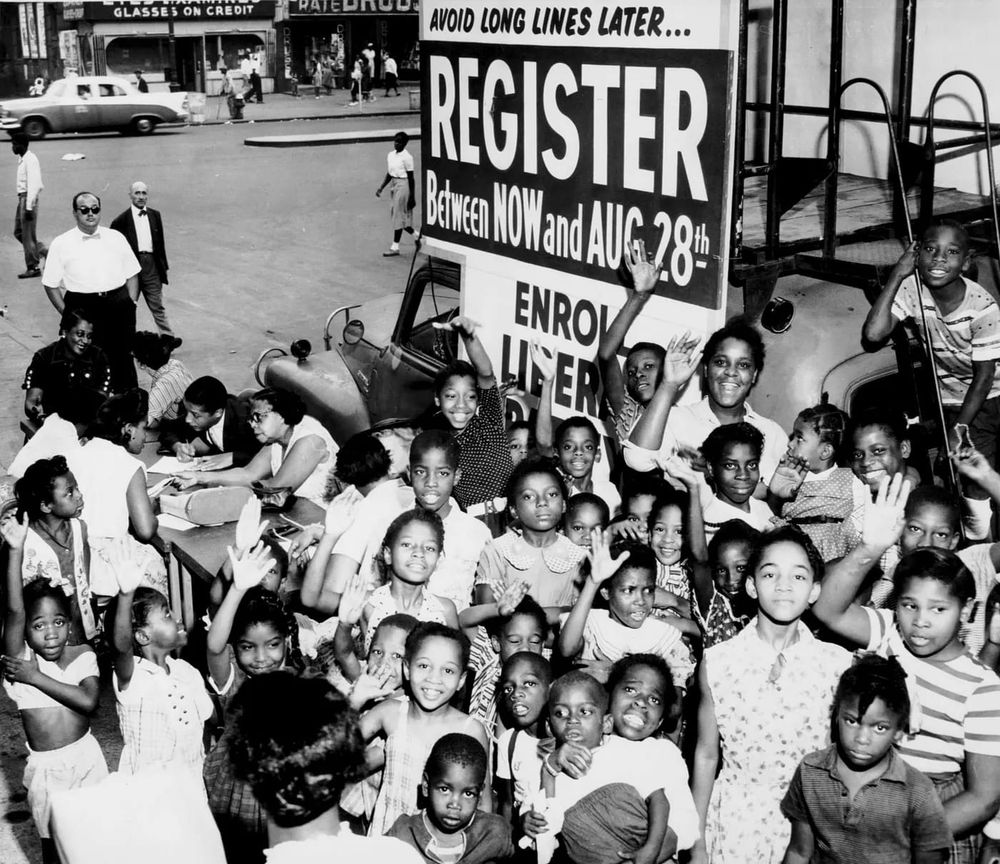
In 1870, the 15th Amendment was ratified. This was only a handful of years after slavery was abolished, and the right to vote was being protected by law, in theory.
In actuality, a loss is not a loss, and white people found other ways to suppress the Black vote. Poll taxes, literacy tests, and the grandfather clause were all applied to keep Black people away while protecting white votes.
Over the next hundred years, people fought for actual equal rights. Progress really started in the 1950s with Brown v Board of Education, which ended the “separate but equal” mandate.
More marches.
More boycotts.
More sit-ins.
More sacrifice.
Finally, the Civil Rights Act was passed in 1964, which outlawed discrimination based on race and sex. Another big win, but remember, a loss is never a loss.
Poll taxes and literacy tests were carefully crafted to circumvent the new laws.
Many white people were even more desperate to keep Black voices down. Black people had received so much, yet they wanted more! They actually wanted to be able to vote just like any white person.
Marches continued, including a key one in Selma. The violence was caught on camera. Peaceful protestors beaten for wanting their humanity. America, a country that claimed to be the world’s hero, was doing this to its own people.
The timing was right. Back then, some people actually cared when they witnessed violence on camera. A handful of months later, the Voting Rights Act was passed, finally eliminating the last vestiges of legal, open Confederacy oppression.
However, remember, a loss is not a loss.
Step 2-rebuild, rebrand
Progress continued to march forward despite constant pushback. On the surface, things were getting better. They were better. On the streets, however, people were dying. Imagine what the police do when everyone has a camera. Now, imagine that world without a camera. I’m still convinced the government introduced crack to Black communities.
As for the Black vote, apathy was now the key. Rebrand. Call your opponents the racists. Language is key.
Lee Atwater, a political strategist, utilized dog whistles. Instead of being overtly racist, they used coded language to gather the support of other racists while also being able to deny their own racism.
“You start out in 1954 by saying, ‘Nigger, nigger, nigger.’ By 1968 you can’t say ‘nigger’ — that hurts you, backfires. So you say stuff like, uh, forced busing, states’ rights, and all that stuff, and you’re getting so abstract. Now, you’re talking about cutting taxes, and all these things you’re talking about are totally economic things and a byproduct of them is, blacks get hurt worse than whites… ‘We want to cut this,’ is much more abstract than even the busing thing, and a hell of a lot more abstract than ‘Nigger, nigger, nigger’” source.
We would be lying if we didn’t say this was effective. When I ask most white people why they voted for Trump, they tell me something like the economy. It is a one-word answer that makes absolutely no sense, especially if we look at it in hindsight.
However, Trump was just the final nail in an already pierced coffin. By the time enough people care, the body count will be high, and some of us may be in chains.
Step 3: Capture the Supreme Court by any means necessary
The first crack came when the Supreme Court voted unanimously in Brown v Board of Education. Control the court and control the law. Control the law, and roll back civil rights.
This plan truly went into motion near the end of President Obama’s final term. A Black man becoming president was enough for racists to take the mask off. There was no time to play fair. They refused to ever let anything like that happen again.
So when Supreme Court Justice Antonin Scalia died, Republicans blocked Obama’s nominee Merrick Garland. Garland was a moderate who would probably not have allowed his political biases to impact his reading of the law, at least not as much as what we see today.
The seat was vacant for a year. Trump was able to appoint 3 justices, including one he appointed during his last year as president. These justices were not at all moderate and were loyal to Trump. I hope the hypocrisy is obvious because that is key in the next phase.
Step 4: Do whatever you want and ignore criticism and hypocrisy
It was a long road, but we are here. They stripped away DEI initiatives, not only hurting Black people, but also women, disabled people, and so on.
Most recently, the Trump-powered Supreme Court weakened the Voting Rights Act, allowing states to redraw maps to ensure Black voters will have less of a voice.
This isn’t just about Black leadership being selected, but about who leaders are meant to serve. When the Black vote loses power, it is even easier to ignore those communities.
Justice Ketanji Brown Jackson, one of the few dissenting voices on the Supreme Court, warned the court against appearing biased when it rushed the new ruling, failing to wait the usual 32 days to issue the final judgment. The goal to allow Louisiana to redraw its map before the election is obvious.
Jackson’s peers responded by calling her points baseless, trivial, and insulting. Of course, they did; even Trump’s justices have the playbook. We are on step 4. We get to do what we want!
Step 5: Um, apparently, say the quiet part out loud. Nothing matters anymore.
Trump has normalized speaking the truth and then saying the opposite. Sometimes it feels like the whole world, or at least white people, is gaslighting me.
It is no secret why the Supreme Court weakened the Voting Rights Act. It was obvious when states rushed to redraw majority Black districts to eliminate Black leadership and even white leadership who worked for the Black community.
South Carolina called for a special session, rushing to do the same thing. The goal was clear: get rid of James E. Clyburn, South Carolina’s only Black representative at the Congressional level.
At the time of writing, the vote hasn’t been a smooth ride in South Carolina. Trump specifically called for SC to strike now. Yet, there is still some hesitation.
Has the first state to secede from the Union grown in a way the rest of the South clearly hasn’t?
Absolutely not.
SC State Senator Shane Massey revealed the truth:
“Most South Carolinians are conservative. That doesn’t mean they always vote for Republicans, but they are conservative. Um, and I think when you do something like this, there is going to be an impact. I also think that one of the side effects of this is, very candidly, you are going to motivate the Black turnout…and there will be repercussions for that” -source.
Of course, this debate boils down to the best way to control the Black vote. It isn’t about if Black people should have a voice; it is about the best way to limit that voice.
What now?
Perhaps you once thought the march of progress was inevitable.
I did.
We now know this is so far from the truth. It is always in jeopardy. It is always a fight, and we got lazy. People chose apathy and ignorance to enjoy the peace of the moment.
We allowed Trump to win…twice!
We are now playing on hard mode, but it is only going to get harder if we don’t fight back now.
Where does it end?
Well, I can’t help but think about the question my student asked me, and that possible future feels more real every day.
I don’t have all the answers, but I’m making phone calls, and I’m encouraging my friends and associates, especially the white ones, to make similar calls.
What worked fifty years ago won’t work now, but we can’t sit on our hands and ignore the problem. It is back to the streets. Back to the boycotts. Back to the marches. Back to the sacrifices.
It may be a little uncomfortable, but our ancestors made the impossible happen. Let’s do it again.