

Chances are that when the 120th Congress assembles after the midterm elections there won’t be a single Black face among Republican members of the House of Representatives. It isn’t because the four existing members are expected to lose their seats in a wave election. They have all self-deported, giving up their seats for a variety of reasons, not that four of anything constitutes a variety.
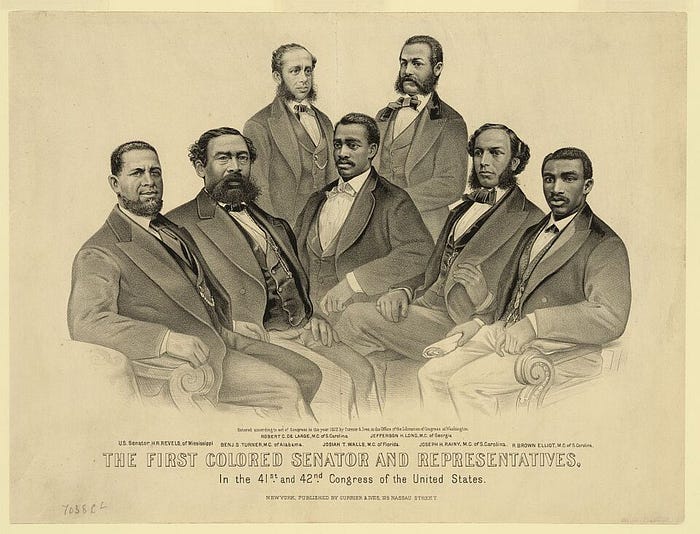
During the 41st and 42nd sessions of Congress, several Black members were elected to Congress, mostly to the House of Representatives, and all were Republicans. It took until the 71st Congress for a Black Democrat, Oscar De Priest, to be elected to Congress, after 28 years without Black representation.
Here are the four Black Republicans not returning and their stated reasons:
1. Wesley Hunt (Texas–38th District)
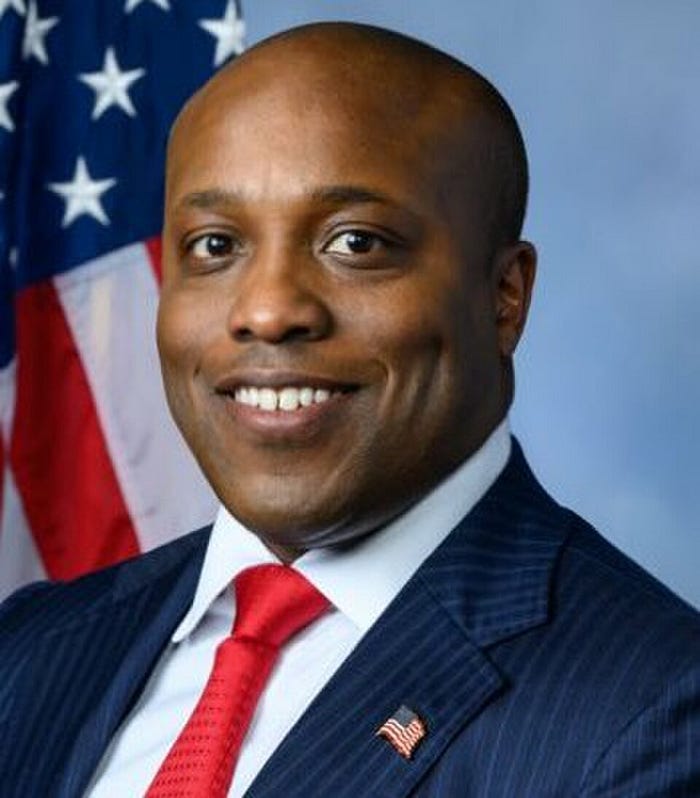

Wesley Hunt ran for a U.S. Senate seat in Texas, where he was routed in the Republican Primary. Although Hunt lost his 2026 Senate primary, the campaign expanded his statewide name recognition, built a larger donor network, strengthened his national GOP profile, and increased his long‑term political and professional opportunities. These are common strategic gains for candidates who run statewide, even when they do not win. If nothing else, he can become a contributor on Fox News.
2. John James (Michigan–10th District)
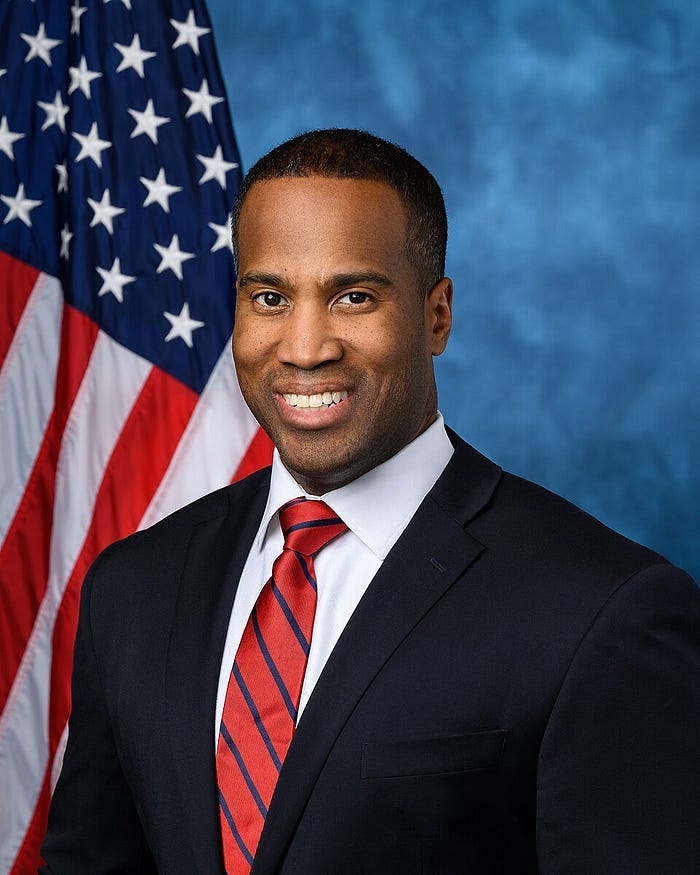
United States Congress, CC BY-SA 4.0 <https://creativecommons.org/licenses/by-sa/4.0>, via Wikimedia Commons
Current polling and prediction‑market data show John James trailing in the 2026 Michigan governor’s race, with Jocelyn Benson holding a mid‑single to low‑double‑digit lead. Forecasters still rate the race as competitive, but current data favors Democrats. James will get the same generic benefits, like increased state name recognition, as Hunt. Still, the Fox News option is likely where he ends up.
3. Byron Donalds (Florida–19th District)
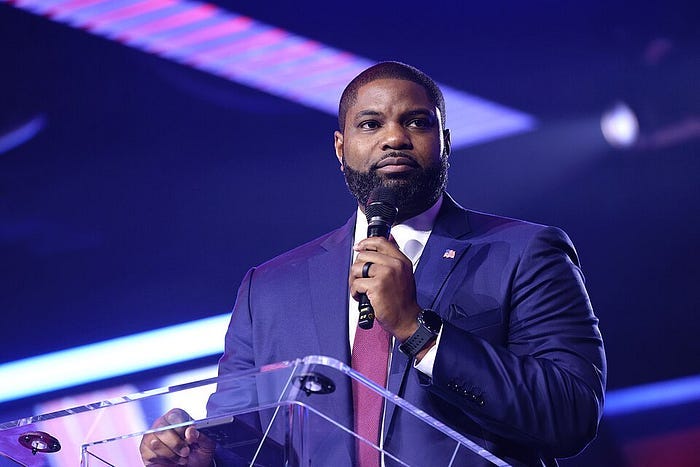
The official version is that Byron Donalds is running for governor of Florida to advance a Trump‑aligned conservative agenda, address affordability and economic issues, and capitalize on his position as the GOP frontrunner with major fundraising and institutional support. His campaign frames the race around protecting the “Florida Dream,” while his actions suggest he is also building a broader statewide and national political profile.
Most recent polling shows Byron Donalds leading Democratic candidates in several head‑to‑head matchups, though one major poll finds him trailing David Jolly. Overall, the race appears competitive, with Donalds holding a modest advantage in most surveys.
I have one question. Do Republicans not know he was once a drug dealer, or do they not care? After years of denying his ex-wife’s statements, Donalds grudgingly acknowledged selling a little weed to get by. He was also arrested in 2000, when he was 20, on a fraud charge.
Donalds is leading among Republicans because he has Donald Trump’s endorsement. Trump endorsed Donalds because he faithfully does everything Trump asks, and it was a way to block Ron DeSantis’s wife, Casey, from winning the seat. Trump is betting that a Republican in Florida with his endorsement will win. Democrats are hoping that Trump’s plummeting ratings will drag Donalds down as his only campaign strategy is hanging onto Trump’s coattails. Donalds will be welcome on Fox, he might even try selling marijuana like in the old days, legally this time.
4. Burgess Owens (Utah–4th District)
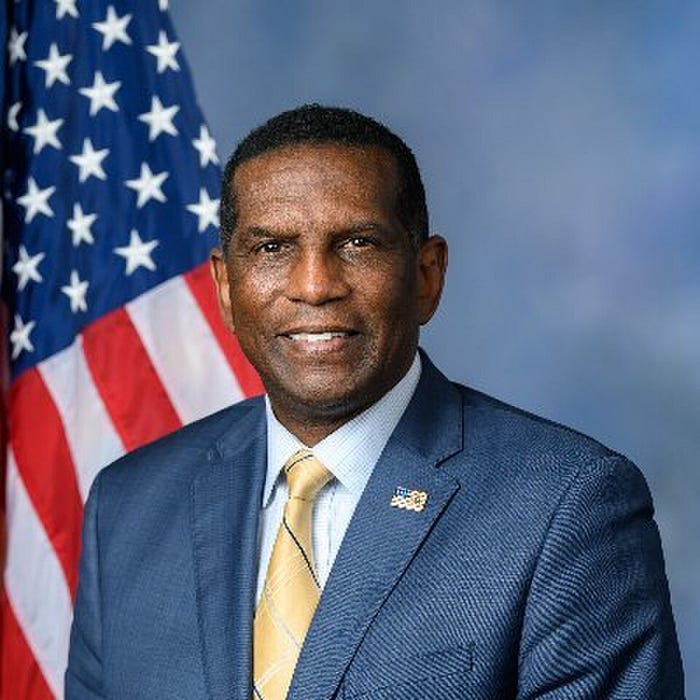
Burgess Owens retired because Utah’s new court‑ordered redistricting map eliminated one of the state’s Republican seats, forcing four GOP incumbents into competition for three districts. After courts rejected efforts to block the map, Owens chose not to run again, saying he could better pursue his mission outside elected office. I almost feel for Owens. I hope somebody promised him something to get out of the race. He could have run for higher office like the others, but in Utah, what chance did he really have?
There is still one hope for a Black Republican member of the House in 2027. Charlotte Bergmann is the Black Republican woman running for Congress in Memphis. She has run repeatedly for Tennessee’s 9th District since 2010, winning nearly every GOP primary but losing every general election by wide margins in a heavily Democratic district.
Due to redistricting, the chances are far better that a Republican could win the seat. Tennessee’s 9th District Republican primary features Charlotte Bergmann — who has been the party’s perennial nominee for more than a decade — facing three challengers: Brent Taylor, Jeremy Thompson, and Todd Warner. While Bergmann has consistently dominated GOP primaries since 2010, the district’s deep-blue makeup has kept her far from competitive in general elections, and this year’s expanded Republican field reflects growing internal frustration with her long string of lopsided losses. Should Bergmann lose, and the Republican House membership have no Black representation, fear not, because Republicans have a deep pool to draw from. Here’s a photo of Mike Johnson addressing Republican House interns:
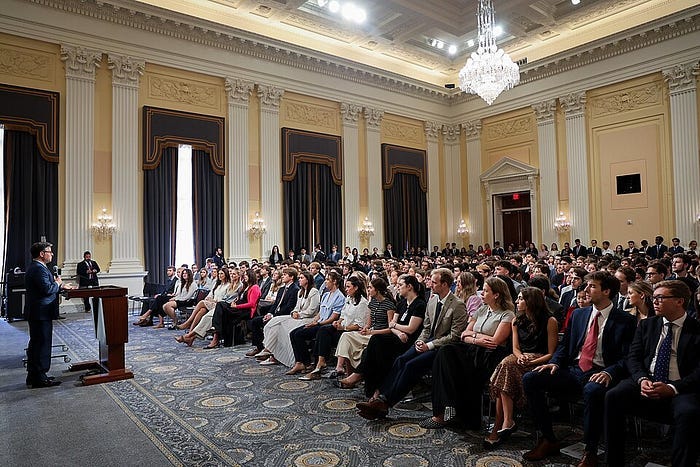
Office of Speaker Mike Johnson, Public domain, via Wikimedia Commons
Three of the four leaving the House were seeking higher office, which you can’t blame them for (except the drug dealer). Maybe they left because they saw no hope for advancement in the Party and were tired of trying. The drug dealer was propped up as a possible Speaker of the House during several rounds of voting during the last vote for Speaker. He never had a chance, but it was nice to be nominated. Donalds is clinging to MAGA for his political life, but are they really that into him? Time will tell.
The House of Representatives is supposed to represent the people. It’s in the name. You tell me what it means when none of the faces are Black after the next election? I hate jumping to conclusions.