
America. FIFA has 211 member nations, more than are in the United Nations, which has 193. Soccer began appearing in American school sports in the early 1900s, but it did not become common until the 1960s–1970s, and it did not become mainstream until the 1980s–1990s. At my Minnesota high school in the 70s, we had brown soccer balls, always partially deflated, but had no organized teams and played maybe twice a year in physical education classes.
Soccer has a well-earned reputation for racism largely because the sport’s fan culture is built on tribalism, and tribalism has a dark mode. In stadiums across Europe and South America, fans use race as a weapon to intimidate or humiliate opposing players: monkey chants, banana‑throwing, slurs, and coordinated abuse that spills from the stands into social media within seconds. When a Black player misses a penalty or a North African player scores against a rival, the reaction isn’t just about the game; it becomes a referendum on belonging, immigration, and who counts as part of the nation. Because soccer is the world’s most global sport, these flashpoints happen everywhere, making the racism impossible to hide.
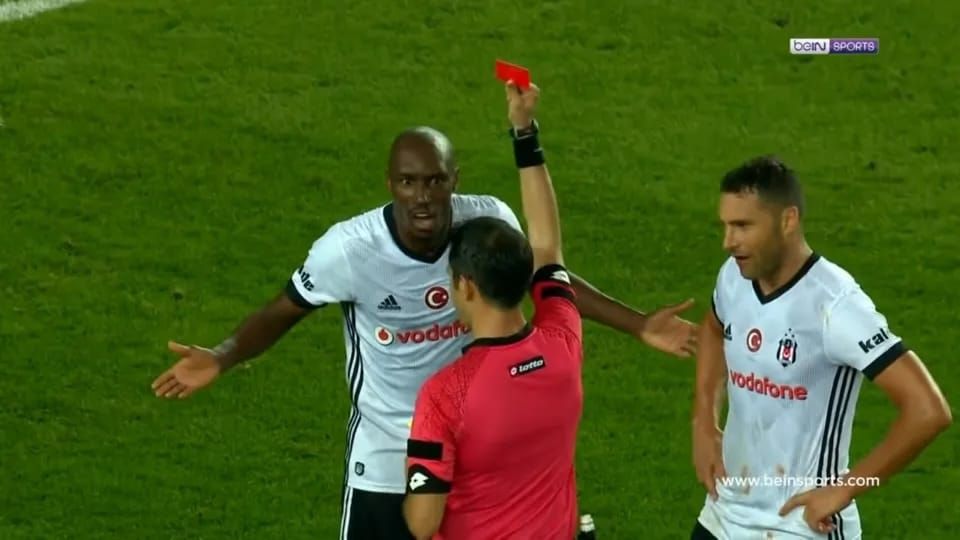
Players and referees also contribute to the sport’s reputation, though in different ways. Several players have been caught using racist language on the pitch, often in heated confrontations where insults escalate quickly. Referees, meanwhile, have faced criticism for inconsistent responses, sometimes ignoring racist abuse, sometimes failing to stop matches, and sometimes penalizing players who react to being targeted. The result is a perception that the sport’s institutions tolerate racism or treat it as “part of the game,” especially when governing bodies issue weak punishments or allow matches to continue despite hostile environments. Together, the conduct of fans, players, and officials creates a feedback loop: racism happens publicly, is inadequately addressed, and becomes part of soccer’s global narrative.
Understanding the racism embedded in soccer requires an understanding of how the game is now played all over the world came to be. Games involving kicking a ball into a net trace back to ancient China, Mesoamerica, Japan, Greece, and Rome, but the first countries to play a game recognizably related to modern soccer were China and England. China played cuju in the 3rd–2nd century BC, and England formalized the modern rules in the 19th century.
The idea of team sports originated in Mesoamerica… and became popular among cultures such as the Teotihuacanos, Aztecs, and Maya beginning about 3,000 years ago. The first known example of a team game involving a ball… occurred in old Mesoamerican cultures over 3,000 years ago. Japan adopted and modified cuju into kemari, a cooperative keep‑up game.
There was no accepted set of rules, and in England, different schools played by their own rules until the Cambridge Rules were standardized. Those rules were developed by students at Cambridge University in 1848, with representatives from several elite English public schools — Eton, Harrow, Rugby, Winchester, and Shrewsbury. Each school had its own version of football, and matches between them were chaotic because no one agreed on what counted as a foul, a goal, or even legal movement of the ball. Cambridge acted as neutral ground. The students met, debated, and produced the first serious attempt at a unified, written, kicking‑only code of football. These rules banned carrying the ball, outlawed hacking and tripping, defined the field, and introduced standardized restarts. In other words, they created the skeleton of modern soccer.
The Cambridge Rules were eventually replaced by the Football Association’s Laws of the Game, published in London in 1863. The FA used the Cambridge Rules as their template but formalized them into an official national code. This moment is what permanently split soccer from rugby: the FA adopted Cambridge’s kicking‑only philosophy, while Rugby School and its supporters walked out and formed their own sport. From 1863 onward, the FA Laws became the foundation for global soccer, later adopted by the International Football Association Board (IFAB) and FIFA. Every match played today — from the World Cup to a pickup game in my town of Palm Coast — traces its rulebook back to Cambridge’s student‑written code and the FA’s 1863 decision to adopt it.
Soccer’s Laws of the Game didn’t spread across Europe and the world because everyone suddenly fell in love with a British pastime. They spread because Britain spent the late 19th and early 20th centuries building an empire that touched every continent, and the empire carried its culture with it — schools, churches, railways, military garrisons, and, inevitably, football. British soldiers played the game in colonial forts; British engineers played it in mining towns and railway camps; British missionaries taught it in schools designed to “civilize” colonized children. Everywhere missionaries built a school, they laid out a soccer field.
The Laws of the Game — codified by the Football Association in 1863 — became the default rulebook because Britain had the global infrastructure to enforce them. Wherever the empire went, the rules went. By the early 1900s, the FA Laws were embedded in colonial education systems from Lagos to Bombay, Nairobi to Kingston, Cape Town to Hong Kong. Soccer didn’t spread organically. It spread through power.
Racism shaped this spread just as much as colonialism did. In many colonies, Europeans treated soccer as a marker of superiority: they played in exclusive clubs, barred Africans and Asians from joining, and enforced racial segregation on pitches and in stadiums. When colonized people formed their own clubs, colonial authorities often dismissed them as inferior imitators or restricted their access to facilities. Even after independence, the racial hierarchy built into the sport lingered. European clubs scouted African and South American players as cheap labor, fans weaponized race as a tool of intimidation, and governing bodies often ignored racist abuse because punishing it meant confronting the sport’s colonial inheritance. The global spread of soccer wasn’t just a story of cultural diffusion — it was a story of empire, hierarchy, and a rulebook that became universal because the people who wrote it controlled half the planet.
FIFA has made attempts to police racism, as if it were possible when racism is so entrenched in the culture. FIFA’s recent anti‑racism and anti‑abuse measures fall into two distinct categories: on‑field behavioral rules (including penalties for players covering their mouths) and symbolic/structural tools (such as the “X” gesture) intended to provide players and referees with a standardized way to report racism. Both emerged because FIFA finally admitted that racism wasn’t just a fan problem; it was happening between players, in officiating decisions, and in moments the cameras couldn’t fully capture.
Rules were implemented to battle racism on the field. Here are two major ones:
1. Penalties for players covering their mouths (lip‑reading rule)
Beginning in 2024–2026, FIFA and IFAB introduced a new misconduct rule: If a player covers their mouth during a heated confrontation, the referee may issue a yellow or red card.
2. The “X” gesture — a standardized signal for suspected racism
In 2023–2024, FIFA introduced the “X” gesture as an officially recognized signal players can use to alert referees to racism or discrimination.
In a recent World Cup match of Egypt v. Argentina, an Egyptian coach made the “X” gesture, essentially accusing the referees of racially biased officiating — not just bad calls, but discrimination severe enough to trigger FIFA’s anti‑racism protocol. In his view, the officials weren’t merely making mistakes; they were cheating Egypt in a way he believed was rooted in bias, and the “X” was the strongest symbolic tool available to communicate that in real time. The gesture is designed to stop play, alert the referee crew, and escalate the incident to VAR and match delegates. When a coach uses it against officials, it’s interpreted as a claim that the referees themselves committed discriminatory misconduct.
Because the gesture is reserved for racism and discrimination, FIFA treated his action as a false allegation against match officials, which is one of the most serious offenses in the rulebook. He was immediately dismissed from the technical area, charged with bringing the game into disrepute, and later received a multi‑match suspension and a fine. FIFA’s disciplinary committee ruled that he misused an anti‑racism symbol to protest refereeing decisions, which they consider an abuse of a protocol meant to protect players rather than a tool for tactical or political protest. FIFA was not willing to acknowledge the possibility that racism favoring a country that is 1% Black against an African nation was a possibility.
Soccer fandom is built on us-versus-them, and in that emotional framework, fans don’t think in terms of racial logic. They think in terms of maximum insult. When an opposing player is Black, the racist slur becomes the sharpest weapon available. The same fans may adore their own Black striker because he is part of “us.” In this context, racism is a tool. And tools are used selectively.
When Donald Trump stepped in to protect a U.S. player who is only American because of birthright citizenship, he wasn’t defending the principle of birthright citizenship. He was defending the usefulness of that specific player to the United States, in a moment of national visibility. He was able to overlook his racist behavior when he thought there was something to be gained.
Racism in soccer isn’t always logical, but it is often painfully true, surfacing in moments when tribalism overwhelms humanity, and the world’s most universal sport becomes a mirror of its deepest fractures. The contradictions — fans idolizing Black players on their own team while dehumanizing Black players on another — reveal that racism in the game is less about coherent ideology and more about weaponized emotion. Still, the very scale of soccer is also its hope. If billions of people can share one sport, then billions of people can someday share a version of it free from the hostility that has traveled with it since empire. I want a day when the world’s most popular game finally outruns the racism that has fueled it, and becomes as inclusive in practice as it has always claimed to be in spirit.