
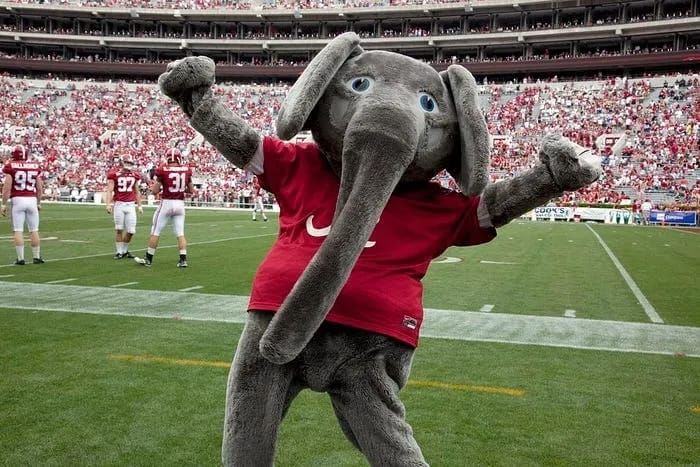
For the first fifty years of my life, I was a sports fanatic. I’ve now slowed down to a sports enthusiast, but sports have always been meaningful to me. In high school, I played football, basketball, baseball, and track. Those were whittled down to basketball and track when I left Minneapolis and went to Fisk University in Nashville. For those curious, I threw the discus and shot put on the track team. I will forever hold the discus school record in the discus, as Marshall University High closed a few years after I graduated, and nobody will come along to beat me.
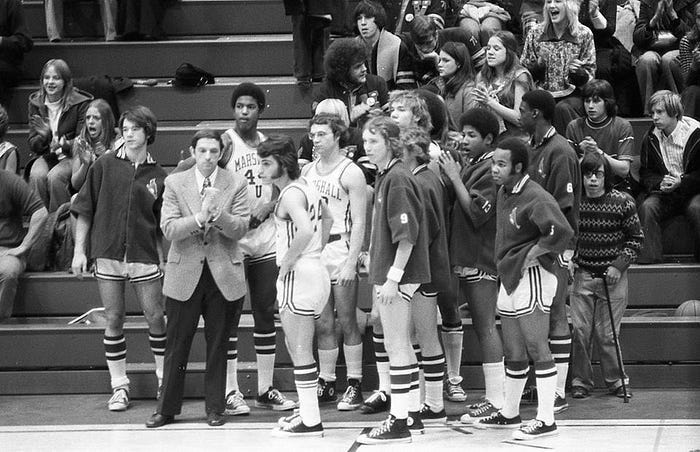
Marshall-U High Cardinals, I’m the tallest Black kid. The second tallest is Garry “Jellybean” Johnson of The Time
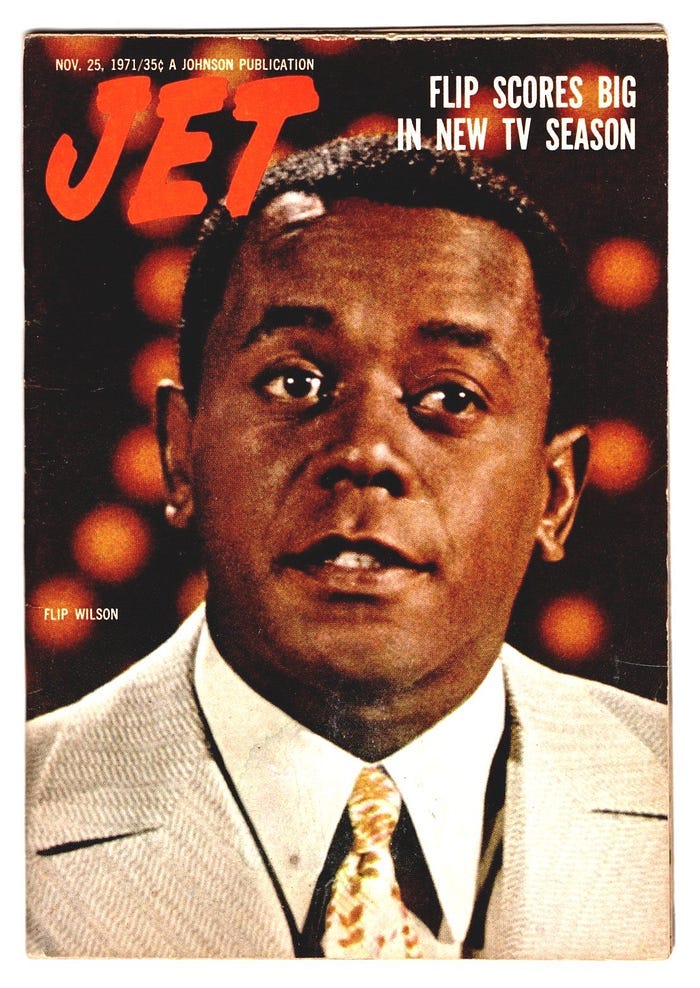
As a kid, I would walk to Crown Barbershop on 38th and 4th Avenue to get haircuts. There was always a wait, and I would grab a Jet Magazine off the table to read. Yes, I opened it up to the swimsuit picture in the center, and followed the celebrities. But I also followed the National Black College Football Rankings provided by the Sheridan Broadcasting Network. I became familiar with Grambling, Texas Southern, Jackson State, Southern University, Tennessee State, and North Carolina A&T, among others, though they were far from my Minnesota existence.
From grades 7–12, I attended school two blocks from the University of Minnesota campus. I grew up a fan of the Gophers and was accustomed to seeing Black athletes. A friend’s brother had played quarterback for the University of Minnesota. The basketball team featured several Black athletes, and we’d sneak into Williams Arena to watch them play. Dave Winfield starred for the baseball team. The wrestling team only had one Black person, but I didn’t watch them anyway. While I expected to see Black athletes at Minnesota, I barely noticed that the University of Alabama didn’t sign its first football player until I was a high school sophomore.
When I went to college in Nashville, I thought I was done playing sports. I was lightly recruited in basketball after high school, though I was All-City. My one campus visit was to the University of Minnesota-Morris on the site of a former federal Indian boarding school. As a trade-off for use of the land, Native Americans attend tuition-free, though I don’t recall seeing any Native Americans during my two-day visit. The school was almost all white as far as I could tell. I was paired with a Black member of the basketball team who showed me around. He took me to a party on my one night there, where weed was openly smoked (it was the 70s), and the girls were friendly. I was 17 at the time, and kissing a college girl was a new experience. Not enough for me to commit to a western Minnesota college in the prairie. I was a National Merit Semifinalist and was being recruited by hundreds of schools for academics. My grandparents more or less told me I was going to Fisk.
Sports were everywhere in Nashville, my freshman year; both Tennessee State and Fisk had undefeated football teams. Vanderbilt University was 5–6. Vandy was integrated in 1969, which was ahead of Alabama (1971), Georgia (1971), LSU (1972), Ole Miss (1972), Auburn (1970), and Mississippi (1969). Vanderbilt was a private institution and faced less pressure than the state schools that made up the rest of the Southeastern Conference (SEC). In the 70s, integration meant easing one or two Black players onto a team to see how they fit in, gradually increasing once the first ones had proven themselves and could mentor those who came afterward.
Basketball was a little different. Vanderbilt’s first player was Perry Wallace, the first Black basketball player in the SEC, who became All-Conference. The following year, they added Godfrey Dillard, who transferred after one year. After a year of being all-white again, Vandy recruited a local high school star, Bill Ligon from Gallatin, just outside of Nashville. Ligon was the sixth man and the best athlete on the squad. That year, Vandy marketed the “F Troop,” Butch Feher, Jeff Fosnes, and Lee Fowler, all of whom were white. Ligon was the only one to ever play in the NBA, spending a year with the Detroit Pistons before playing overseas. I had a chance to get to know Bill, but regretfully never asked him about his experience at Vanderbilt as one of only two Black members of the team. After his basketball career, Bill became an attorney. He passed away two years ago.
Southern state schools, in particular, didn’t integrate because it was the right thing to do. They did it because they could no longer be competitive while excluding some of the best athletes in the nation. Adolph Rupp at Kentucky didn’t recruit Black players until an all-Black starting five at Texas Western beat Kentucky in the 1966 NCAA Championship Game. Bear Bryant at Alabama didn’t recruit Black players until USC embarrassed Alabama at Legion Field in Birmingham on national television, featuring USC’s Black players, including Sam (Bam) Cunningham.
Every major Southern state school was segregated when it was founded. Even the earliest Southern integrations were court‑forced.
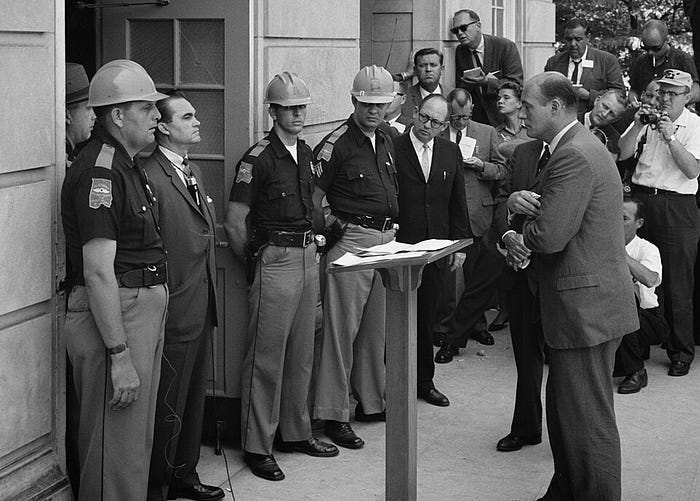
George Wallace blocking integration at Alabama.-Warren K. Leffler, U.S. News & World Report Magazine, Public domain, via Wikimedia Commons
Examples:
- University of Arkansas — first to integrate (1948), but only after litigation.
- University of Kentucky — 1949
- University of North Carolina — 1951
- University of Tennessee — 1952
- University of Alabama — 1963 (after Wallace’s “Stand in the Schoolhouse Door”)
- University of Mississippi — 1962 (James Meredith, federal troops)
Every one of these was a desegregation fight, and integration didn’t extend to the athletic teams, which remained all-white for up to two decades afterward. These schools that fought to exclude Black students now depend on them to compete for national titles. The states that control those schools through Boards of Regents, or other governing boards, are currently engaging in redistricting, in most cases targeting Black representation in Congress.
The NAACP has launched a campaign urging Black athletes to boycott eight schools in states rushing to redistrict mid-cycle rather than the normal period after new census results. The targeted schools are as follows:
- Alabama
- Florida
- Georgia
- Louisiana
- Mississippi
- South Carolina
- Tennessee
- Texas
“The NAACP will not watch the same institutions that depend on Black athletic prowess to fill their stadiums and their bank accounts remain silent while their states strip Black communities of their voice,” — NAACP National President and CEO Derrick Johnson
The NAACP argues that Southern public universities are complicit in discrimination because they profit from Black athletes while remaining silent as their states dismantle DEI programs, erase Black history, and dilute Black voting power. Through its Out of Bounds campaign, the NAACP calls this a coordinated attack on Black civic and educational rights — and urges Black athletes, families, alums, and fans to withhold athletic and financial support until universities publicly oppose these discriminatory policies.
I have friends and relatives who love them some Alabama, Georgia, or Florida State football teams. In my freshman year, Fisk University started classes a month ahead of the University of Minnesota. I came home during that month and bumped into the Minnesota Gophers Black Assistant Coach. I knew who he was, as I followed the team religiously, and was surprised that he knew me. He asked what I was doing and if I wanted a scholarship to Minnesota. Two months earlier, I’d have jumped at the chance to play for the team I’d idolized.
My point is, some Black kids have dreamed of playing for their state schools, and asking their participation in a boycott is a big ask. Especially if their dream was to play professional sports. Before integration, many Black athletes from HBCUs went on to star in professional sports. Football had Willie Lanier from Morgan State and Buck Buchanan from Grambling. There were Deacon Jones of Mississippi Valley State, Bob Hayes of Florida A&M, and Harold Carmichael of Southern. In basketball, there were Earl “The Pearl” Monroe of Winston-Salem State, Willis Reed of Grambling, and Dick Barnett of Tennessee State. The first Black player in the MLB’s American League was Larry Doby of Virginia Union.
My first year at Fisk, though integration had begun, Doug Williams was the quarterback at Grambling, throwing to wide receiver Sammy White. My friends and I went to watch them play Tennessee State in Nashville. TSU that year had the #1 NFL Draft Pick, Ed “Too Tall” Jones. When Fisk hosted Alabama A&M, I watched John Stallworth accumulate over 200 receiving yards, though we won the game.
In basketball, I played against TSU’s All-American Truck Robinson (we won that game, too), who was twice an NBA All-Star and once led the league in rebounding. The following year, I watched Billy Ray Bates of Kentucky State University play against Tennessee State. He later made the NBA All-Rookie Team. Albany State College had the Jones brothers, and FAMU had Clemon Johnson. There was still a pipeline from HBCUs to professional sports, but that’s hardly true now. The last time the NFL drafted someone from an HBCU was 2022. The last NBA HBCU draft pick was in 2012.
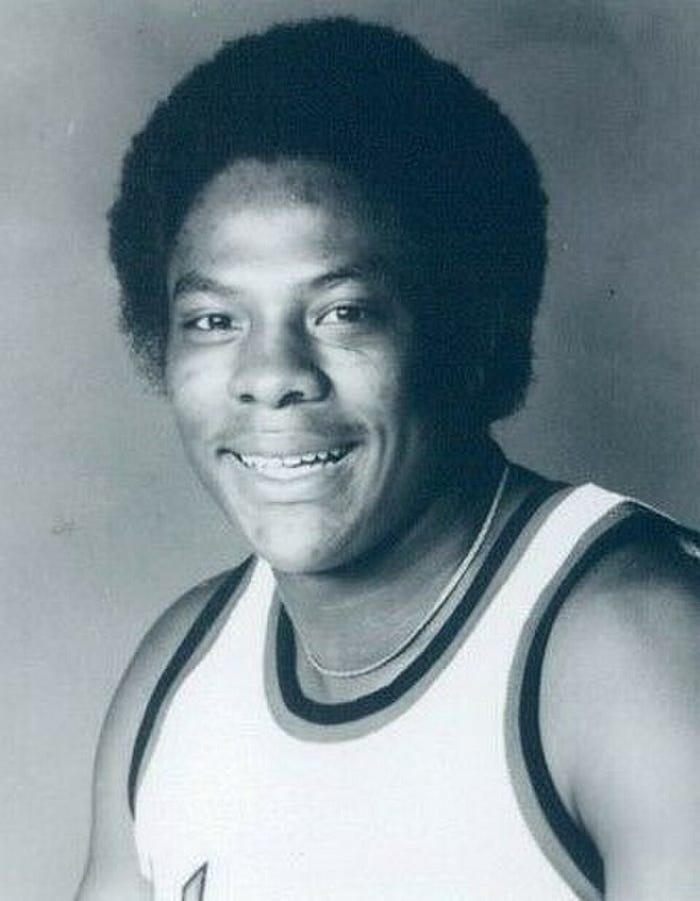
Billy Ray Bates -Portland Trail Blazers, Public domain, via Wikimedia Commons
There are dozens of reasons that an HBCU might be a better fit for a student-athlete, but better odds of going pro isn’t one of them, except in certain cases. Many former NBA and NFL coaches are now coaching at HBCUs, and the chance to be mentored could be a plus.
Students wanting to participate in the boycott still have the option of private schools; some Northern private colleges and universities have equivalent facilities and programs. Sthletes who grew up saying “Roll Tide” could just as easily get used to the Notre Dame fight song.
The students would do well to remember that none of the schools love you for yourself, but for what you can do for them. The same schools would toss you aside if you get injured, don’t make the team, or cause them embarrassment. They are also erasing your history and removing programs designed to level the playing field that they now label reverse discrimination.
In the end, a boycott isn’t about punishing universities — it’s about forcing them to choose a side. For too long, Southern institutions have recruited Black athletes for their speed, strength, and star power while staying silent as those same states dismantle DEI programs, erase Black history, and redraw political maps to weaken Black voting strength. That silence is not neutrality. It is consent.
A stand has to be taken because the pattern is unmistakable: states are restricting the very rights that made progress possible, and universities are benefiting from Black labor while refusing to defend Black dignity. If these institutions want the talent, culture, and revenue that Black athletes bring, then they must also defend the communities those athletes come from. Until they do, withholding our bodies, our brilliance, and our dollars is not only justified — it is necessary. Boycotts have always been the language America listens to when it refuses to hear anything else. This moment is no different.
There will likely be backlash. Some students may be uncomfortable with being the face of the boycott. This protest can be silent for those not ready to face a politician or alumni association that would hold a grudge. This could be a silent protest, letting the trend speak for itself.
I have gotten to know some of the first Black football players at the University of Florida. The institution did not love them and often resented their presence. These schools are owed no loyalty. It wasn’t that long ago that they wouldn’t let you play. As you decide where you want to attend, keep in mind that they are showing you who they are. Believe them!