
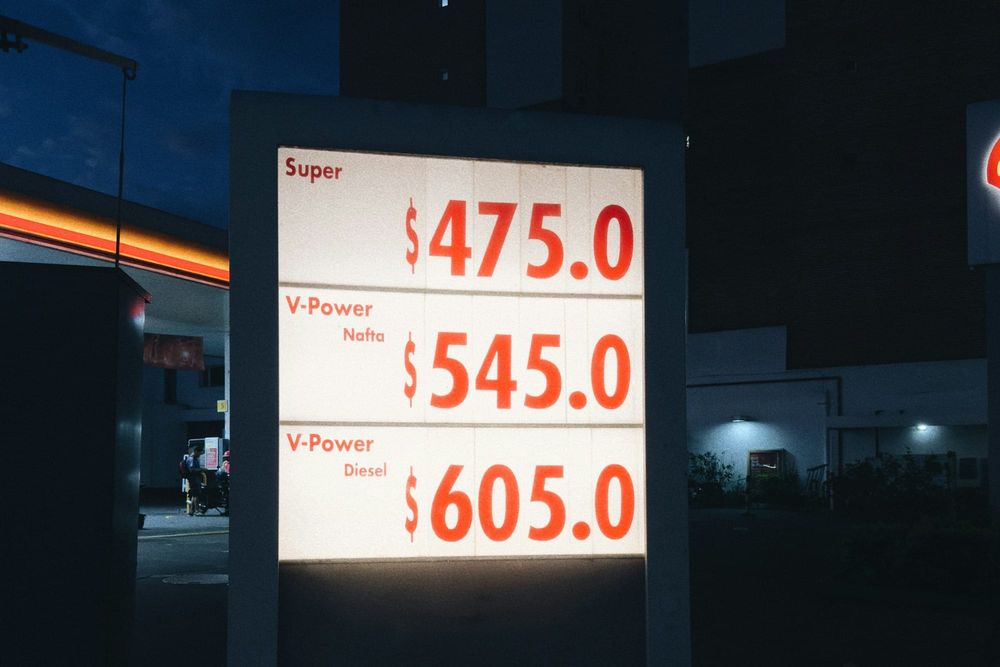
You don’t need a poll to tell you the economy feels bad. You feel it every time you gas up, every rent notice, every grocery run where the total jumps before your cart is even half full.
For a lot of Americans, especially the folks who took a chance on Donald Trump because he promised them a “great economy,” that feeling has turned into something else: the sense that they got conned.
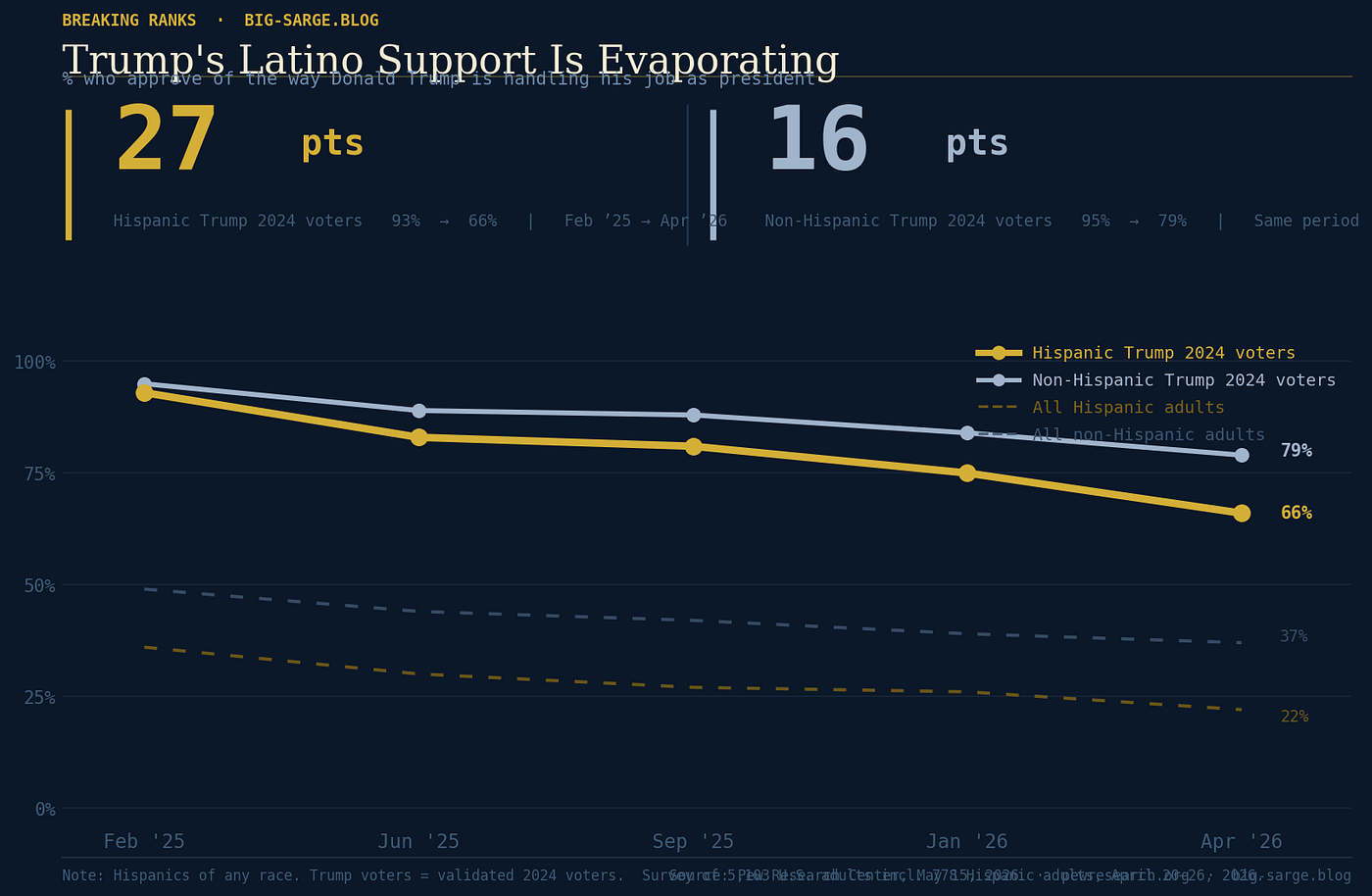
Over the last few months, that gut check has started to show up in the numbers. New national surveys have Trump’s job approval sliding to its lowest point of his second term, with voters souring on his handling of the economy, inflation, and basic cost-of-living issues. The drop is sharpest among the people his campaign loves to brag about winning over: Hispanic voters who once believed he’d fight for their wallets.
This isn’t just a bad news cycle. It’s the bill coming due.
The optimism is gone
After Trump clawed his way back into the White House, there was a window of raw optimism among his supporters. They wanted to believe he’d learned something from the chaos of his first term. They wanted to believe he’d finally deliver the “best economy ever” he’d been promising for a decade.
In the early months of this second act, some of the polling reflected that hope. Among his own voters, especially white conservatives and the Hispanic and Latino voters who turned his way in November, he posted strong early numbers on “strength,” “gets things done,” and “fights for people like me.”
That’s gone.
Pew’s May 2026 survey found his approval slipping on three traits at once: honesty, competence, and economic performance. All three in the same direction, at the same time. Two weeks later, Pew released the Latino breakdown. His approval among the Latino voters who backed him has hit its lowest point of the second term. But the direction is what matters: down, and fast, hardest on the issues that eat into a family’s margin.
CNN ran a midterm survey in May. So did the Washington Post. They used different methodologies, different samples, different questions. They got the same answer: economic confidence is down, and the people who are down on it are pointing at this administration.
That’s not one bad poll. That’s a pattern.
And the pattern has a face. It’s the person re-doing the math on their lease renewal and staying in the apartment they’ve been trying to leave for two years. It’s the grocery run where you skip the stuff you used to buy without thinking about it. That’s who those trend lines are made of.
The kitchen-table economy Trump doesn’t talk about
Trump still loves to talk about the stock market. He loves jobs numbers when they let him brag. He loves GDP when it looks big on a rally screen.
That is not the economy most people live in.
Most Americans live in an economy where:
- Gas still bleeds more out of each check than it did when they first pulled a lever for him.
- Rent jumped hundreds at renewal. Same building. Different math.
- Groceries stopped climbing. They didn’t come back down.
When pollsters ask about that world, they get a different answer than the one Trump shouts from a podium. CNN’s May survey and the Washington Post’s latest data point the same direction: majorities say the cost of living got worse over the last year, and they’re putting it on this administration.
You can see the strain clearest among working-class voters and among Hispanics, the groups that were supposed to be key proof points in the “Trump is expanding the tent” narrative. Pew’s tracking found broad disapproval of his immigration policies and growing skepticism that he’s improved anyone’s daily life. Newer data adds another layer: those same voters are now more likely to give him failing grades on the economy as well.
When people who once told a pollster “this guy will help my family” start telling that same pollster “this guy is making life harder,” the math has reversed.
The Hispanic voters who are waking up
There’s a reason the Trump camp invested so much energy in celebrating any Hispanic support they could find. It made for a strong story: “See? Even they know my policies work.” It let them push back on critics who warned that his immigration agenda and his culture-war politics were hostile to Latino communities.
But a story only works as long as the numbers cooperate.
The Latino approval slide isn’t happening in a vacuum. Pew’s work, going back to late 2025, found that majorities of Latinos disapproved of his immigration policies, and a large share were skeptical he’d improved their daily economic lives. The newer data adds the other shoe: those same voters are now grading him down on the economy, too.
Those declines track to two things:
- Disapproval of his immigration and border policies, which has been broad and consistent since January.
- A growing read that his economic promises don’t match what their families are actually living.
You don’t have to squint to see the pattern. When someone promises to “bring back good jobs” and “protect your family,” but what you get instead is a higher grocery bill and a president who uses your community as a prop in a border stunt, the shine wears off.
This is the quiet part the Trump campaign doesn’t want to say out loud: the same Hispanic and Latino voters they trumpet in rally speeches are telling pollsters they’re disappointed.
Every good con works the same way. First, you sell hope. Then, you deliver just enough surface action to keep the mark believing. Finally, when the money doesn’t show up and the pain piles on, you blame someone else.
Trump sold himself as a billionaire outsider who could “run the country like a business” and “make everybody rich again.” He told people who felt ignored by both parties that he saw them, that he’d smash the system on their behalf.
Instead, his second term has been a rerun of the first: chaotic policy swings, culture-war theatrics, and an economic story that looks good on cable news chyrons while ordinary people fall further behind.
You can see the con unravel in the trend lines:
- Overall approval sliding on honesty, competence, and “cares about people like me.”
- Hispanic voters showing some of the steepest drops in job approval.
- Voters across parties are telling pollsters they feel worse about the economy than they did a year ago, and they don’t trust his version of what’s happening.
That’s not just “the media being unfair.” That’s people comparing the promise to the bill.
A con man can only keep the act going as long as the mark believes the next card he flips over will fix everything. Once that belief cracks, it spreads. I grew up watching people play 3 card. molly at the back of the bus.
Midterms are where this hurt shows up
The 2026 midterms are where all of this pain is going to hit the scoreboard.
Political analysts are already warning that Trump’s falling approval ratings are darkening Republican prospects, especially in competitive districts with sizable Hispanic populations and a lot of kitchen-table economic anxiety. In those places, a three- or four-point shift among voters who once backed Trump but now feel burned can be the difference between a MAGA loyalist headed back to Congress or a seat flipping.
It doesn’t mean those voters suddenly trust Democrats. Many don’t. What it does mean is that they’re more open than they’ve been in years to the idea that Trumpism is not a one-way ticket to prosperity, and that somebody else needs to be held responsible for the numbers on their receipts.
That’s the real fight of the midterms: whose version of reality those voters decide to believe.
You’re not imagining it. You’re not alone.
If you’re reading this and thinking, “I don’t need a survey to tell me things got worse,” you’re not alone. The polling is simply catching up to what people have been living for months.
Trump can stand on a stage and insist that everything is fine, that you should ignore your own eyes and your own bank account. He can tell you the problem is the media, or immigrants, or some shadowy wave of “fake news.” But at the end of the month, it’s you standing at the counter, card in hand, hoping the charge goes through.
That’s why his numbers are sliding. Not because people suddenly became “anti-Trump,” but because more of his own voters finally see the pattern: big talk, short-term sugar high, long-term hangover.
You can call that politics. I call it a con.